The cloth

Four families,
one lamp.

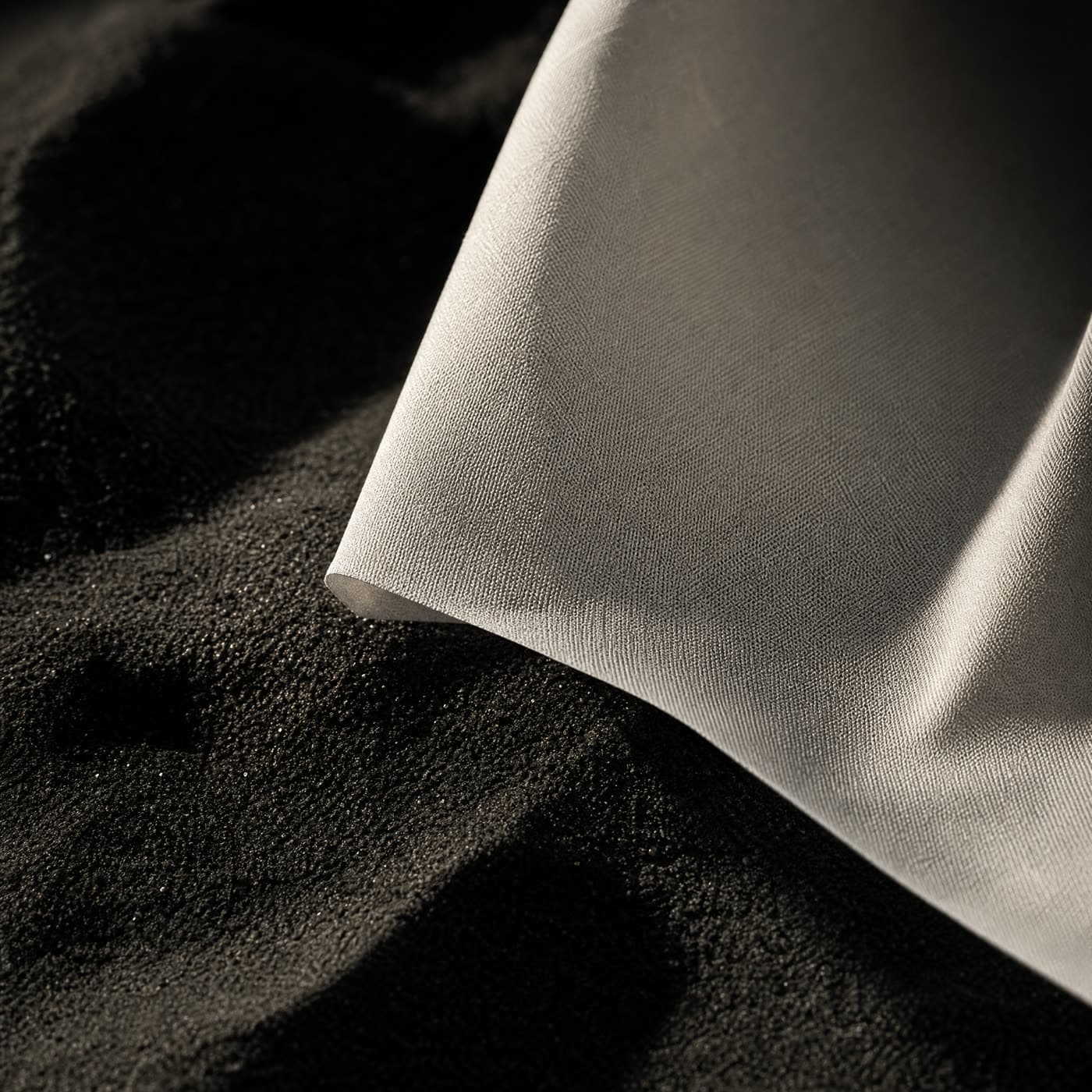
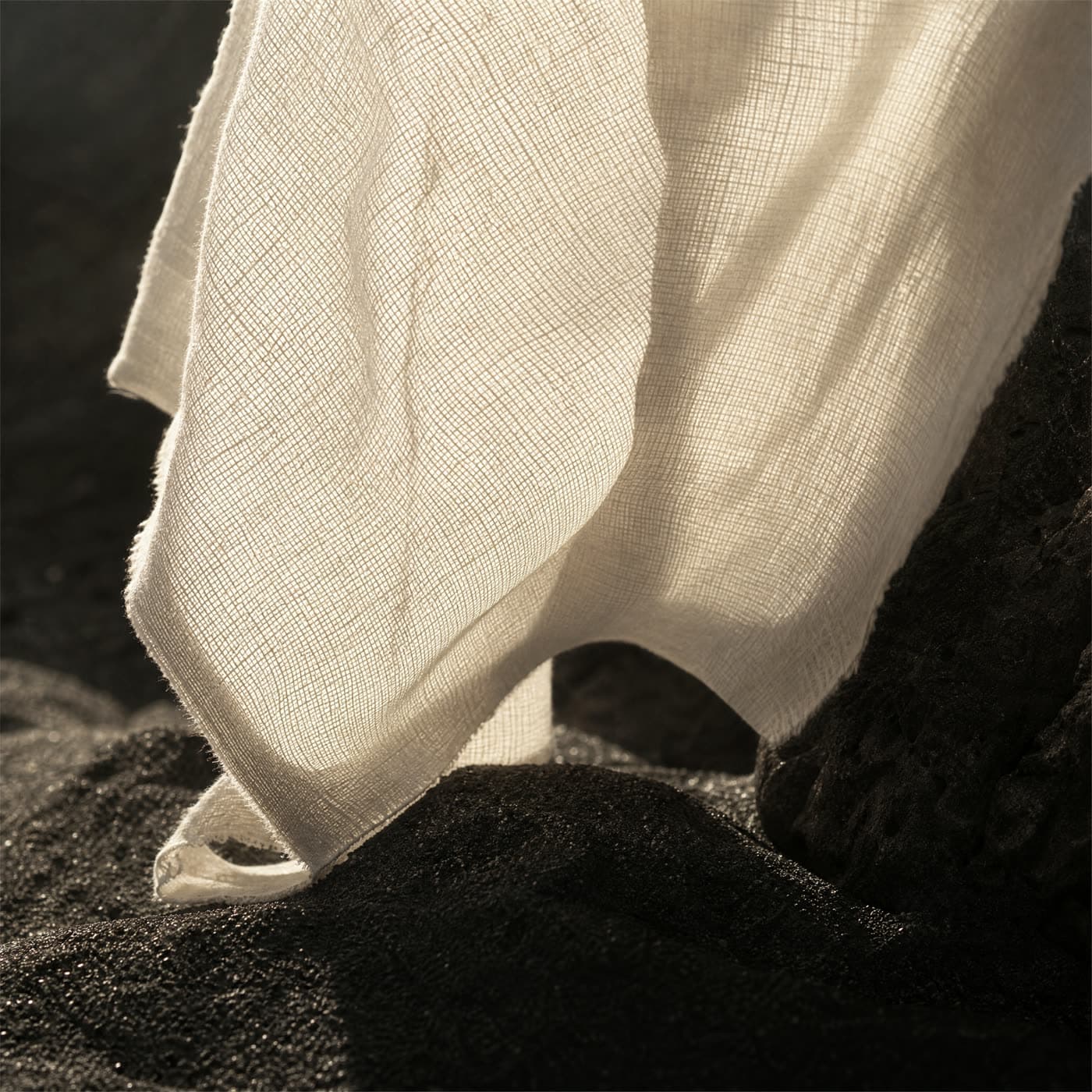
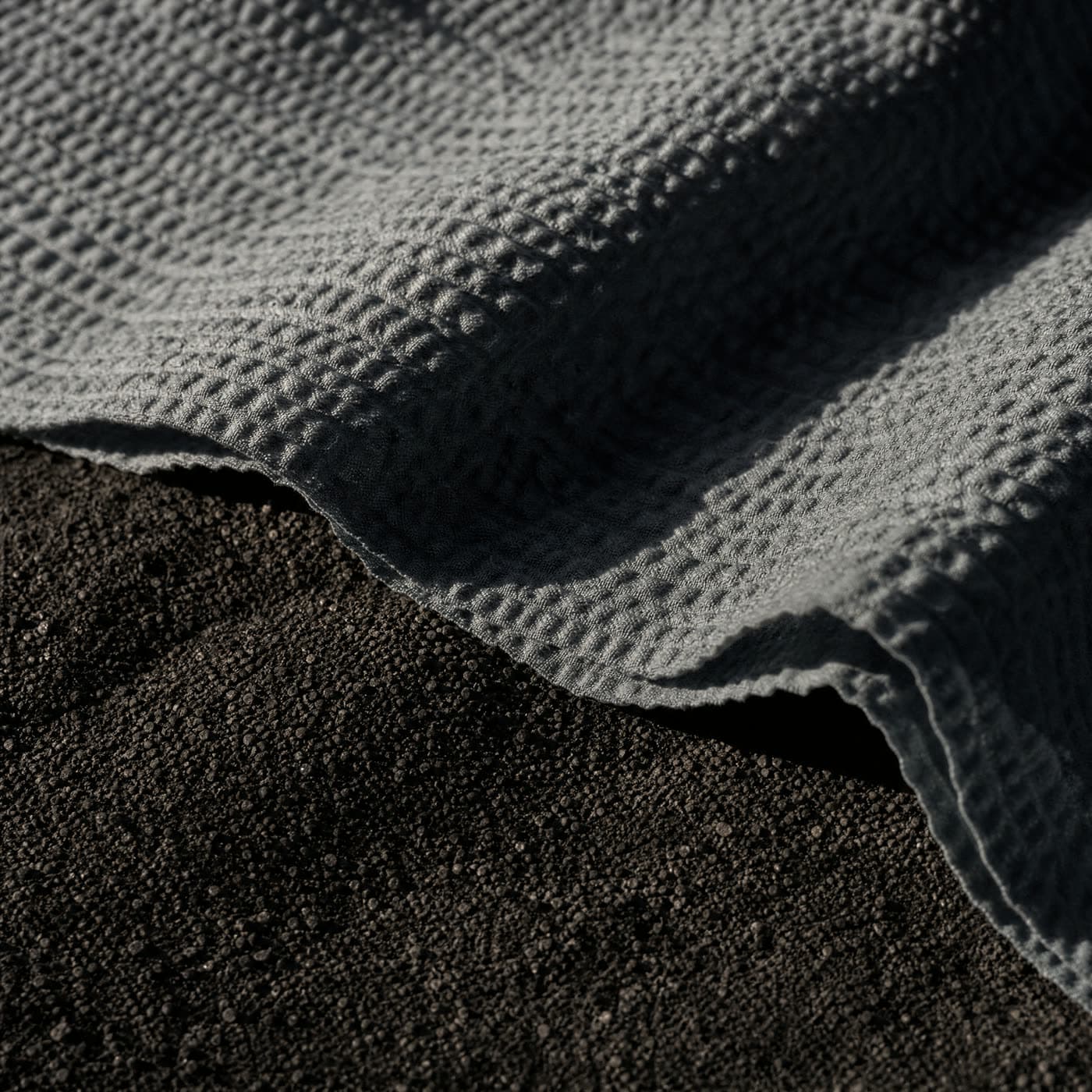
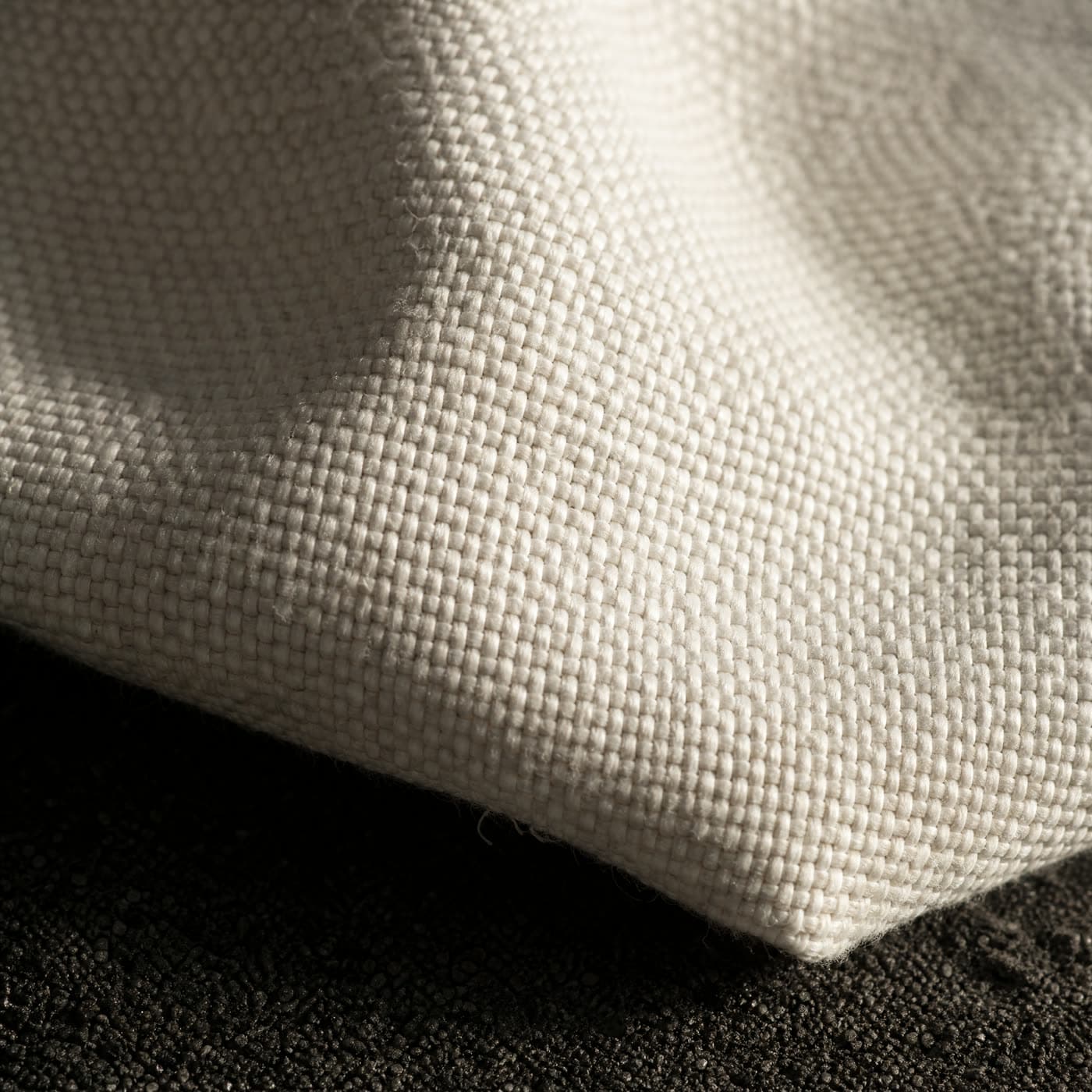
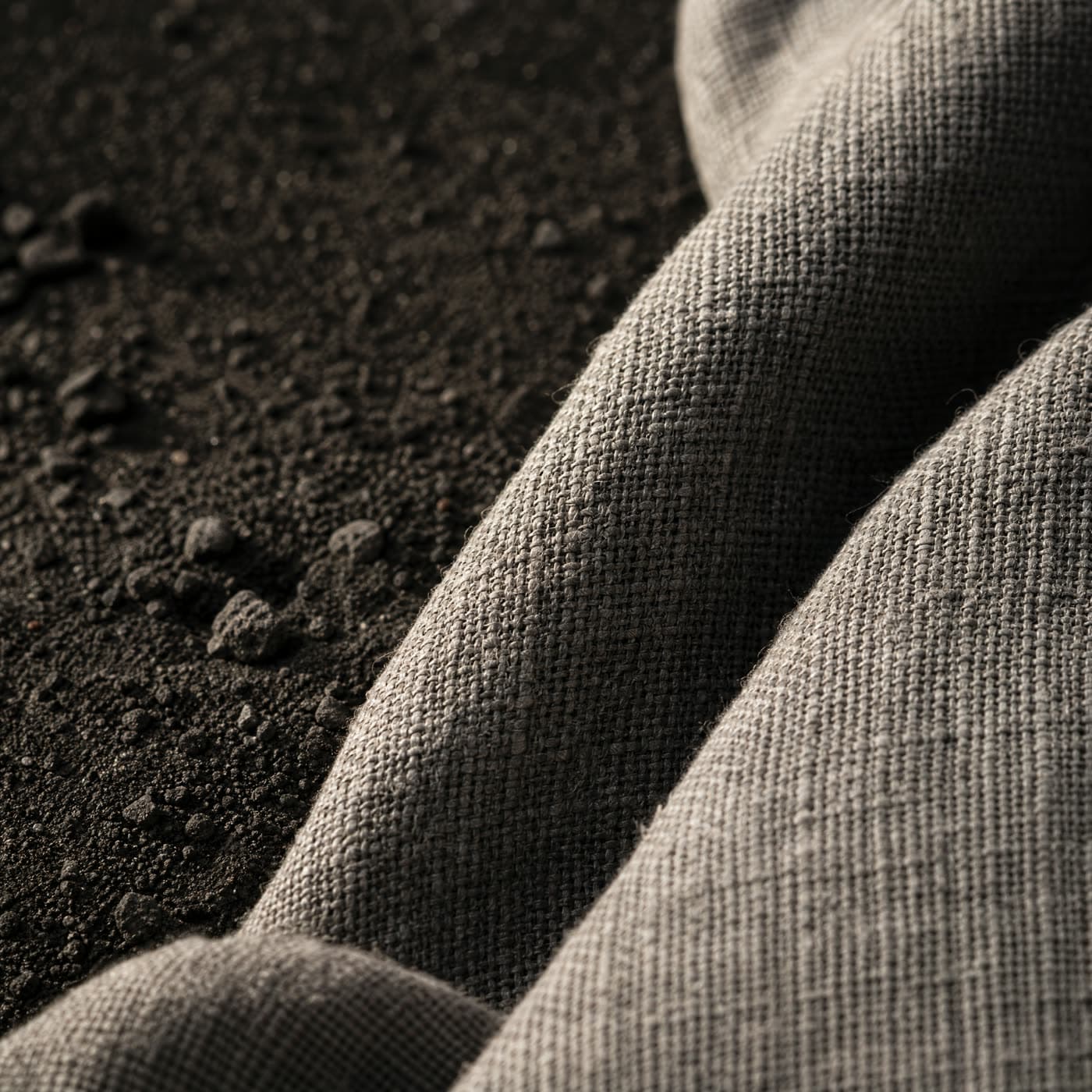
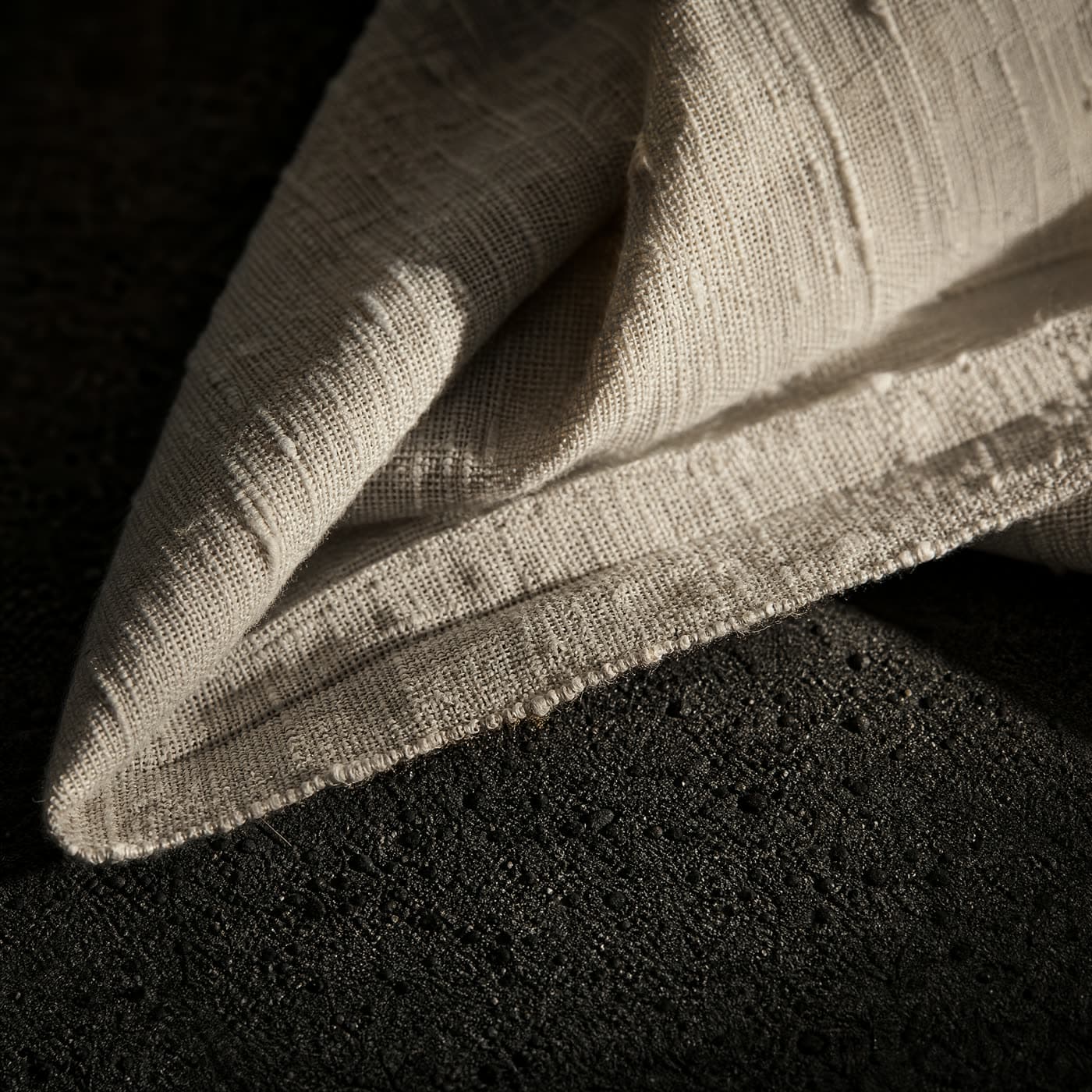
Every macro on this page was shot on the same wall at the same distance under the same light. The only variable is the cloth, which is the only way a comparison is worth anything.

Airflow and creasing are our own relative ratings across this catalogue, not laboratory measurements.

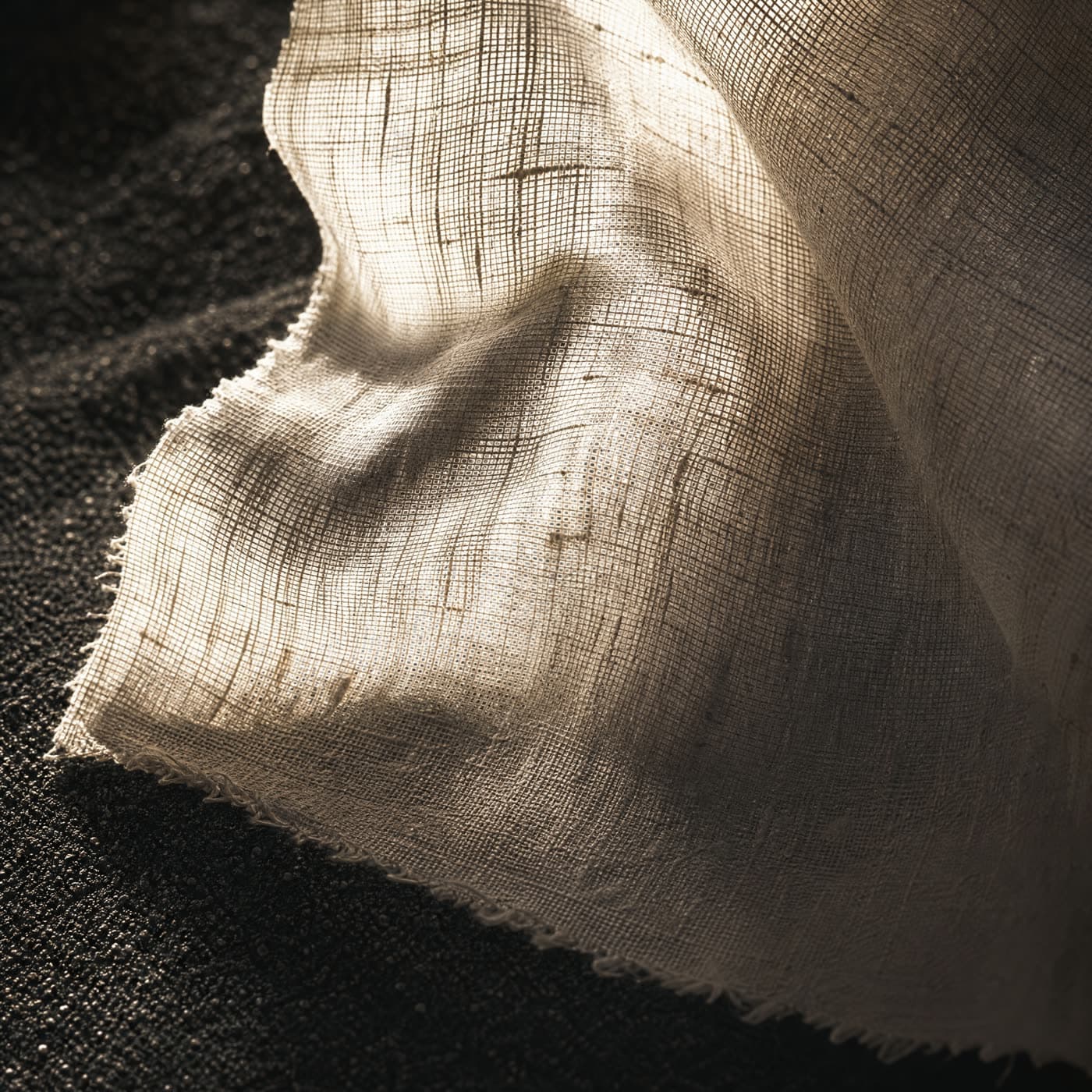
Macro of pure linen.
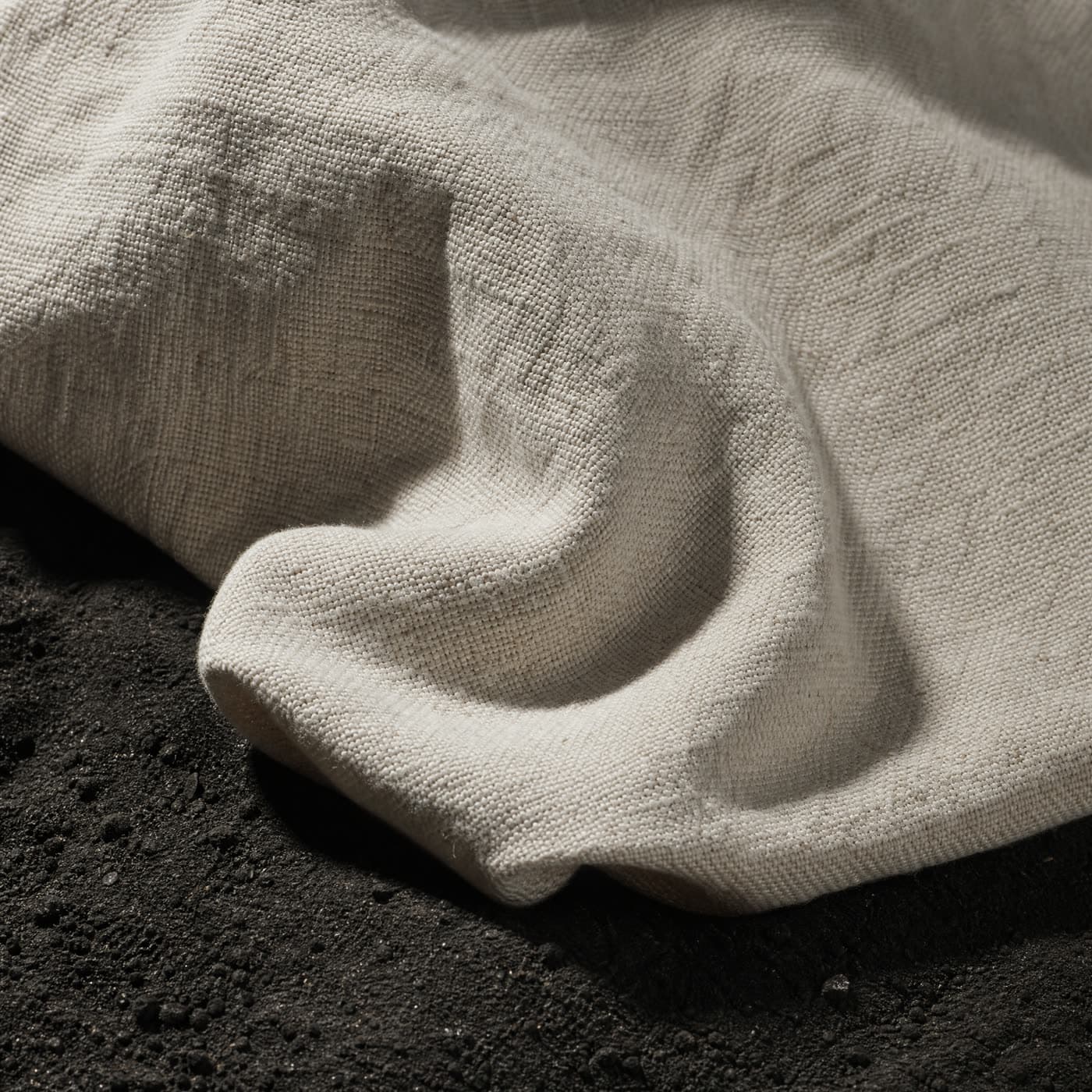
A second pure linen for comparison.

Lino

Pure linen

130 – 200 g/m²

Flax fibre is hollow and stiff. It holds the cloth away from itself, which is why an open linen moves more air than any cotton at the same weight — and it is also why a fold in it stays a fold. The two frames here are the same fibre at 130 and at 200 grams, lit identically from behind. The difference you can see is the difference you feel.

Airflow, typical5 of 5
Creasing, typical5 of 5

It creases from the moment you put it on. If that is going to bother you at four in the afternoon, buy a blend instead and we would rather say so now.
Macro of linen-cotton.
A second linen-cotton for comparison.

Lino e cotone

Linen-cotton

140 – 175 g/m²

Spun together rather than woven in stripes, so every thread carries some of each. Cotton rounds the yarn off and lets the cloth recover from a fold; flax keeps the surface dry and open. We weave four ratios because the right compromise is not the same for a wedding as it is for a Tuesday.

Airflow, typical4 of 5
Creasing, typical3 of 5

A 70/30 behaves almost like pure linen, including the creasing. A 30/70 barely creases and barely breathes like flax. The ratio on the label is the whole story.

Macro of fine cotton.
A second fine cotton for comparison.

Cotone

Fine cotton

85 – 135 g/m²

Where linen stands away from the body, cotton falls onto it. That is a problem in still heat and an advantage under a jacket, where drape is what reads. At the very top of the yarn counts — voile at 85 grams — a cotton becomes open enough to behave like flax under a lamp without folding like it.

Airflow, typical3 of 5
Creasing, typical3 of 5

A voile at 85 g/m² is semi-sheer in every colour we make it in. That is a property of the cloth, not a fault, and it is stated on the product page.

Macro of structured weaves.
A second structured weaves for comparison.

Armature

Structured weaves

125 – 175 g/m²

Seersucker is woven at two tensions so the cloth puckers permanently and only the ridges touch skin. Oxford pairs its threads into a basket, gaining body at the cost of air. Dobby figures the ground so that a plain shirt has something to look at up close. These are decisions made on the loom, not finishes applied afterwards.

Airflow, typical4 of 5
Creasing, typical1 of 5

Seersucker never needs pressing because it was never flat. If you iron it, you have destroyed the thing you paid for.

05

The comparison

Pressed, and after a day.

The frame on the left is how this category is normally photographed. The frame on the right is the same cloth at the end of a day of wear. Drag between them.
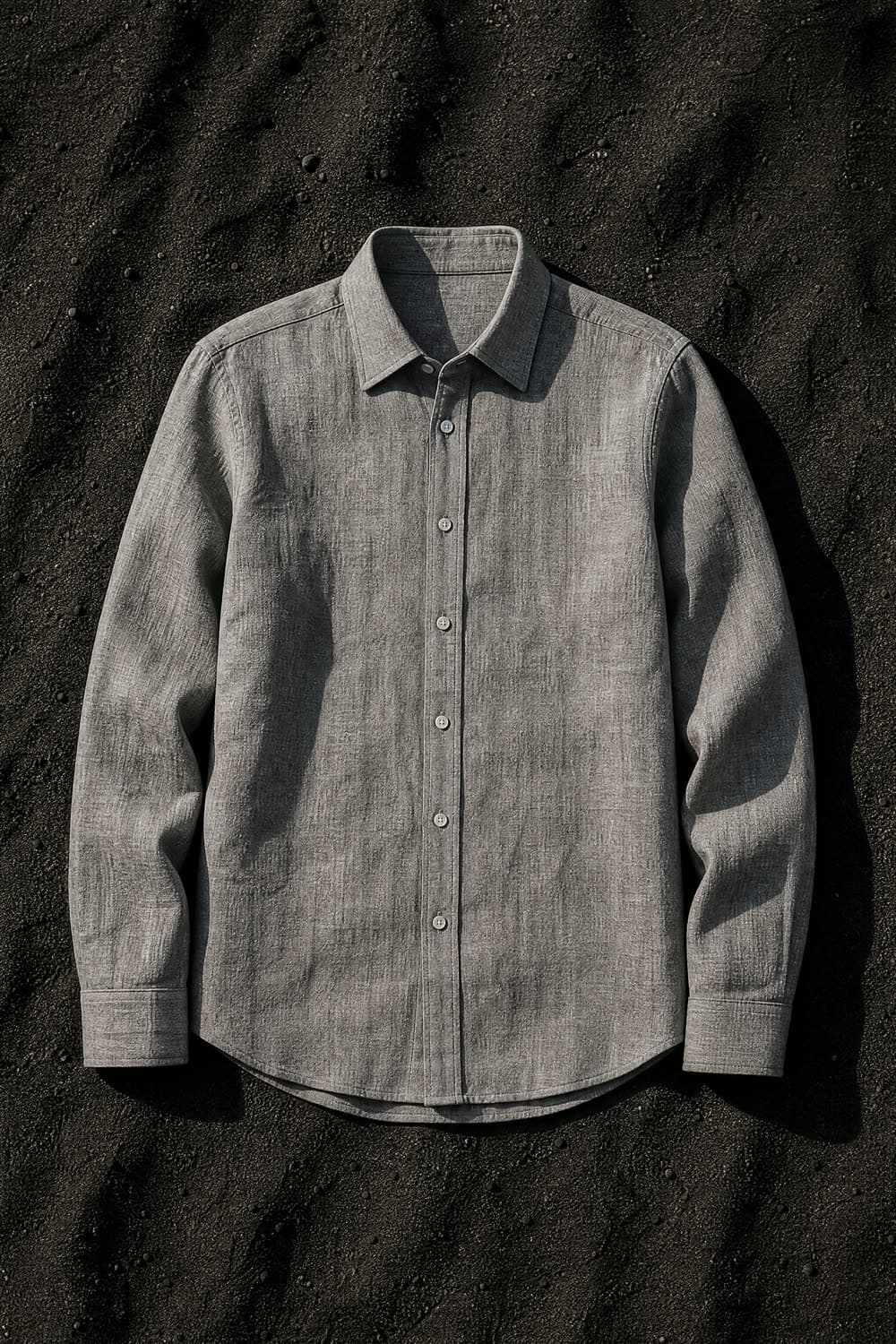
A pure linen shirt pressed and laid flat, the way the category normally photographs it.
The same cloth after a full day of wear, creased at the elbow and the waist, unpressed.
PressedAfter a day

Linen creases. It creases more in humidity and less after the third wash. Every shirt here that contains flax carries that sentence on its own page, and leads with the worn photograph rather than the pressed one.

See the shirts
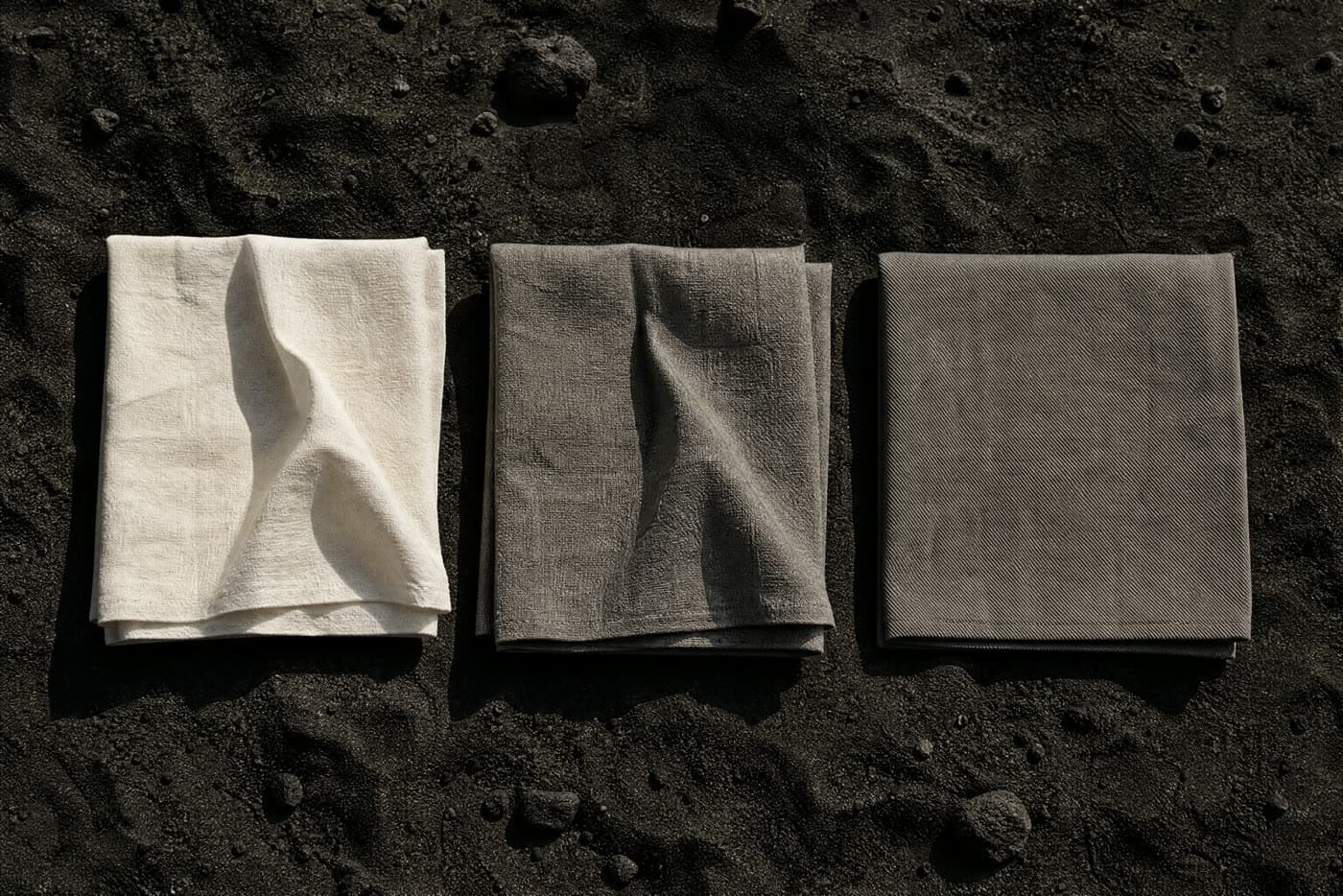
Three squares of cloth photographed after being folded once and released: pure linen holding a sharp fold, a linen-cotton blend holding a softer one, and a cotton twill almost flat again.

Left to right: pure linen, linen-cotton, cotton twill. Each square was folded once, released, and photographed sixty seconds later under the same light.